RSS Feed

Tag Archives: DIY

Last Minute Gift Idea

I didn’t plan to post again until after Christmas, but in case you’re feeling the pinch and wanting to jazz up a last minute, or small, gift, I thought I’d share a neat idea.

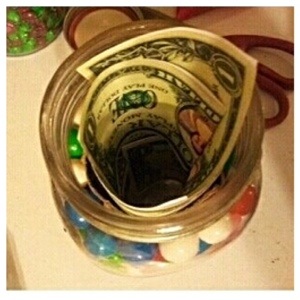
I saw a cute idea on Pinterest where someone filled a mason jar with gum balls, with a clean paper roll hollowing out the middle, so they could hide some money in there as a gift.

20131220-015338.jpg

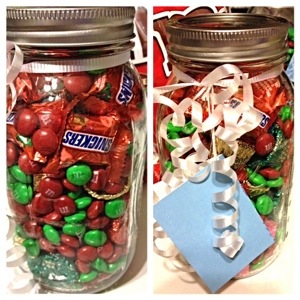
I thought that this is a fun idea and much neater than just a gift card sleeve or card, and figured I could play with the concept a little. I got a couple of bags of holiday candy, the recipient’s favorite chocolates and then M&Ms for the filler to replace the gum balls. I can’t say what I hid in both jars just in case the kids or their parents read this, but I quickly realized that my gifts were definitely too big to fit in a paper roll. *laugh* This is why the M&Ms came into play, since I’d need some small candy to fill the spaces around the gifts, and I’d need a lot more filler without the hollowed out area. I put a small layer at the bottom, so even if they look at the bottom they won’t have a clue that they’re getting something better than a jar of candy. *grin* I put the gifts into baggies, slid the gifts into each jar and filled around them with the bigger candies, and then the M&MS to fill the holes. I then put a simple label and a little ribbon on each.

20131220-020643.jpg

No matter what way the jars are turned you can’t tell that there’s a secret hiding in there. A best friend pointed out that if I’m not there when the kids get their jars, then it’d be smart to say something to the parents, just in case the kids don’t discover the true gifts within a few minutes. Smart advice that I thought I’d pass along. I’m definitely one of those people that are too excited by great ideas and fun gifts that I can barely keep them secret long enough to give them to the person, so I plan to be there when the kids get them. *laugh* If they don’t dig in within the first few minutes I’ll suggest that they dig around a little.

I hope you have a wonderful holiday, no matter how/if you celebrate it, and that this fun idea serves as a little inspiration if you need it. 🙂

Adhesive Be Gone

I haven’t been overly *cough to cover the muttering of my “good” shoulder angel about fibbing* productive lately, but I have actually gotten a lot of non-business things done. *smile* I thought I’d share one of my projects with you, since I’m pretty happy about it and think it’d be handy for everyone to know.

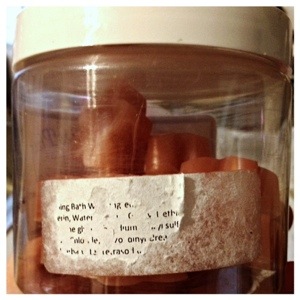
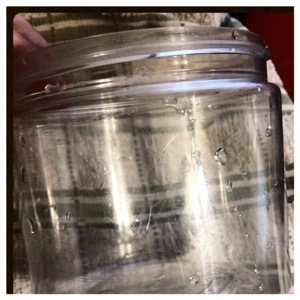
During that cleaning frenzy I unearthed a bagful of plastic jars that I have saved to reuse (not for sale, just for storing stuff or putting test product in so I’m not using up the good stuff), but there were sticky partial labels all over the place and several jars literally stuck to the stupid bag. You know how you think patiently peeling that label will get it all off and you’ll be rewarded with a clean jar? That never works on plastic. At least, not for me! I hit Pinterest for the crafty tips from the home pros and several talked about the ease of removing left behind adhesive with oil, and if you use vegetable oil overnight, then you don’t even have to try to remove the label. Since I had varying examples of label peeling OCD in the bag I thought the variety would be a smart test for this method. I don’t have a specific link to share with you because I honestly ended up combining techniques from several posts/pins that I read. I’ll just give the total process and my additional tips as I go.

20131111-164830.jpg
At the beginning

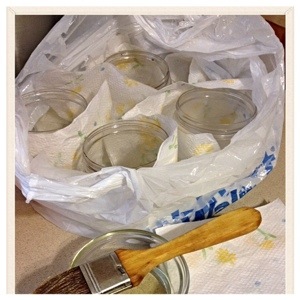
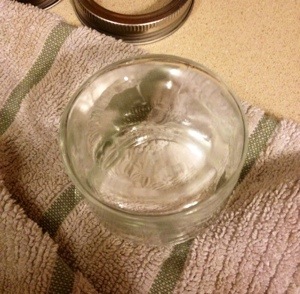
First, you’ll want to cover your counter or table with something disposable. Newspaper, paper towels over a bed of dish towels, whatever. I found it really handy and a LOT less messy to move the project into a plastic bag on top of the bed of towels. (I truly tried the straight forward approach, but still got oil all over until I had a stroke of genius with the bag.) Pour some of your oil into a shallow glass bowl (plastic will be pretty difficult to cover up unless you have a lid, but I had Saran Wrap, so glass moved from my second choice to the smart choice *grin*, and I promise that it’s much easier to brush the oil on than try to lightly douse a napkin straight from the bottle without a mess. I’m all for moisturizing my skin, but DUDE! Just trust me. Lol.). I used my middle of the road paint brush that I typically use for egg washes. And I can’t stress this enough: have a partial box of disposable gloves on hand. Oiled plastic will slip out of oily hands like a sudsy bar of soap. It’s a pain in the snicker doodle and you might end up with the oily and sticky mess stuck to your hoodie. Really. Anyway…also keep a stack of napkins in easy reach.

20131111-164940.jpg

(Put your gloves on now! *grin*) Take your plastic jar and coat all labels and adhesive with oil using circular brushes; working over the opening to the bag. Straight brushing didn’t work nearly as well. Coat it liberally; as in, nearly dripping off. Then slap a napkin over the area. It took a few rounds before I discovered that this step is more effective if you also brush the oil over the napkin that is covering the treated spots. I did a few different amounts, but saturation cuts several hours out of this process. Put the wrapped jar into your bag and continue the process with all of your plastic jars. I found that butting wet areas together worked better, because they weren’t as apt to dry and stop working then.

20131111-165137.jpg All oiled up and no tanning bed in sight

Now, let them soak in the oil bath overnight (12 hours seemed best). I could be all quaint like the posts I read and tell you that they might be ready to clean right off now, but I won’t. I’ll be honest. Only the lightly gunked ones will be ready now (or else they forgot to mention where they got the industrial strength oil or fairy dust, because following the instructions only worked on the cleanest of the group!). Take the cleanest one and rub lightly with the oily napkin that had been covering the area. If the adhesive starts to slip off with the circular rubbing, then you get a brownie button! Hehe. Couldn’t resist. Ahem. Awesome for you! Just keep it up until the goo is all rubbed off. Now, if your jars are more like mine, then there’ll be a little bit of cleaning around the edges, but the napkin might be sticking to the adhesive at the point. Flipping it off won’t work, so don’t bother. I tried. *wink* Just brush some more oil over the napkin and it should release. Liberally swirl more oil onto the labels and adhesives (although all of the labels came off at the this point for me, leaving just the adhesive), and repeat with all of the jars. Now, I haven’t ran the experiment a second time to get a different view on the times with the improved methods, so I can only recommend that you check them every few hours. Following the combination of instructions and then finding my own improvements the whole process took three solid days, but the more liberal application with the swirling movement made a huge difference, so I will plan on 2 days next time. If the oil dries, then you basically just need to give them a bit more attention and reapply oil every hour or so. Otherwise, I aimed for every two hours.

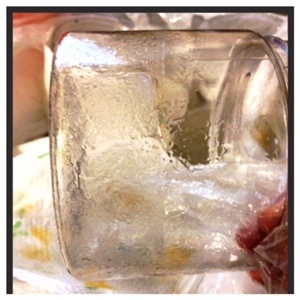
You should notice that a bit more comes off each time you reapply after the 16 hour mark. If you want completely scratch free jars, then you might want to try a soft cloth instead of the napkins, because I noticed after I started doing the 2 hour check ups that the surfaces started to look pretty scuffed. Since I just wanted them clean I got rather ruthless and started using some elbow grease on the third day. With my gloves on I slowly scraped my nail at the edges of the adhesive and began to push the adhesive up. Every few pushes I’d add a little oil, since the lubrication makes a huge difference when you’re rushing the process apparently. *grin* I swiped off the balled up adhesive with a napkin and within about half an hour all of my jars were free of adhesive.

20131111-165949.jpg See my pretty jar!

There is one stumbling block that I have no real advice for and that’s how to get the oil easily off of your jars. It took me three very soapy washes with the heavy duty degreasing version of Dawn before all of the oil was gone. I swore after an extensive washing the first time, complete with a sponge bath, that they were spotless. They sure looked that way until they finished drying. As soon as the water evaporated I noticed beads of oil left behind inside of the jars. A few more really soapy washes later and they are squeaky clean to the touch. *big grin*

All in all, this is a pretty easy cleaning technique. I just covered my oil between treatments and will actually use what’s left the next time I have to do this. I actually used maybe an ounce of oil throughout all of this. (We won’t discuss how much I overestimated that I would need…) It takes some time and frequent checking, but I’d much rather do this technique than fuss with a razor or label scraper. If you’re as dedicated as me about keeping your fingers intact, I’d definitely recommend this technique to you. *grin* There’s very little cost and a simple clean up since you can bundle up all of the mess right in the bag; although you’ll still have a few paper towels from outside the bag to toss that caught drips, but maybe you’re neater than me. Good luck with that! Lol. One last note, this wasn’t nearly as effective on glass as the vinegar soak is that I previously posted about. I tried this first attempt on 5 jars and a glass bottle. The label peeled off the jar after the overnight, but it took until the end of the second day before any of the adhesive came loose, whereas it took only a couple of hours in the vinegar bath for a sink full of glass to come clean.

With the holidays I thought this might be handy for those that like to reuse, reduce, and all that happy stuff. Or you might just be frugal like me. *grin* Whatever you are, I hope this helps you and don’t hesitate to ask a question if you have one.

An Easy Tip

Things have been a bit off kilter lately, so I haven’t been able to check off as many items on my to do list as desired. However, I found a handy bit of info that I want to share. Yet again I’ll be praising the ol’ bottle of plain vinegar once again.

I did a massive cleaning of my supplies cabinet recently and found a bunch of jars that were waiting for me to find homes and purposes for. Some had residue from temporarily holding batches of bath teas and such to be packaged into their bags, while others had started looking weird before I got around to using them to hold product, and I’m ashamed to admit that I had a sink full of these jars when I finished the cabinet. I decided that I wanted to get what labels I could off of them and then try my hand at some mod podge over tissue paper. (Drat you Pinterest for making me feel all crafty and creative. I have enough things that need to be done all ready! I really need to focus on the big things instead of sprucing up some jars. That will make them pretty jars though. Let’s pin that to try out later…) *grin* Since I’m so picky and a (*cough* retentive) perfectionist, I knew I’d get irritated over the residue that I inevitably still have after scrubbing and peeling labels, so I hit Pinterest for some tips from the crafty folks.

Unfortunately I was a little skeptical and didn’t plan to be so excited that I’d blog about this, so I don’t have before pictures. You’re imaginative, so I’m sure you can picture dusty, sticky, and oily jars. Lol. The little jars also had a really weird look to them now, like they had started to brown and develop imperfections in the glass, and it didn’t wash off.

I read several pins that talked about removing labels and gunk off of glass jars, although admittedly I focused more on the natural ingredient ones, mostly because I’ll toss my cookies if I smell bleach and my nails will break off if I play with acetone.

I found three that all talked about soaking jars in really hot water with your preferred standard dish soap (don’t use your “good” stuff that moisturizes your hands and all that stuff. We’re talking about using a plain old degreasing formula here.) and then add some vinegar. Of course the ratios varied impressively (it’s kind of funny how I find trivial things so impressive, but such a difference in opinion gets me all wound up, I guess. *grin*), so I decided to use the grand “whew, we’re starting to smell like I’m pickling, so I think that’s enough” measurement. (Maybe I should be embarrassed by my measuring technique. Hmmm. Nope. Lol.) I used the Bleach Alternative Dawn and probably a cup of vinegar to a sink full of jars and hot water. Then I decided that if it might work in twenty minutes, as most of every version I read did, then I could play on the computer for two hours safely. (I work hard to justify my escapes from reality. Just go with it. *teasing wink*)

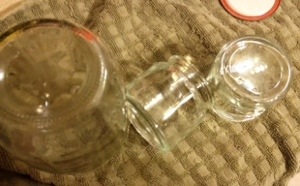
Although the bubbles had dissolved and the water was cool, I saw the remains of the labels still stuck on the jars, so I decided to poke at one to see how disappointed I should be. Umm…the tip of my finger, not my nail mind you, pushed the label completely off without any force. Dude. Okay, I was impressed all ready, but figured I wasn’t going to do a happy dance because the usual residue was probably just waiting for me to touch and get all grossed out by. When I rubbed my finger across the spot and nothing happened I’m pretty sure my eyebrow nearly climbed into my hair line. No joke, every label rubbed off with absolutely no force and the few spots that looked like leftover adhesive rubbed right off. After an extra light wash with dish soap I set them to air dry and was astonished by how nice they looked. Somehow this little bath with a mild, natural, acid and my normal dish soap made these jars shine better than they had when I bought them! I mean, look how nice these look…

20131103-032839.jpg

20131103-032854.jpg

If you have an embarrassing collection of “I’ll get to it later” jars I recommend trying out this super easy method. I’ve been using vinegar for the base in my household cleaner for weeks now, plus am still enjoying it as a fabric softener, and now I’m tickled to have found yet another way for it to make things easier. So put away the rubber gloves and close that window, because we can now pamper ourselves naturally by having a lot less work. 😉

Homemade Fabric Softener

I’m going a little off format while my soaps are setting up, because I’m so excited about a little item you might like to try out. If you’ve ever taken a peek at my Pinterest I don’t pin very many DIY items other than gift baskets. I prefer to actually try them out as I run across them to see if I actually want to recommend them to others.

One such pin I was skeptical about was homemade fabric softener, especially since it is essentially just vinegar. I’ve compared several of these pins and decided to try the most basic version with terrific results. I decided to cut down the measurements a bit. In a 16 ounce bottle (I actually used a food service bottle that I had on hand, plus I wanted to avoid any possible contamination by using a recycled bottle) I put 16 ounces of straight distilled vinegar with .5 ML of Christmas Eve Cookies FO. Most recipes call for EOs, but I had made 3 batches of soaps with the FO and was in the mood to keep working with it. Lol. I mean, how nice would it be to snuggle into a freshly laundered hoodie that smells like cookies?!

After I mixed the two liquids I dug out my old Downy ball from the dark recesses of the laundry room cabinets since I didn’t want to try to catch the proper cycle to add the mixture directly. (Yeah, I’m lazy, but I’m doing the laundry, so that’s enough work all ready in my opinion. *grin*) I subbed the vinegar in the exact same portions as I used to put in the Downy ball.

I admit that I was skeptical that the laundry would turn out scent free. From all of my use of vinegar around the house I knew that it would get my laundry extra clean, but I can always smell the traces of vinegar. I’m tickled to report that even straight out of the washer the clean laundry didn’t have the slightest hint of vinegar. Now that’s impressive considering my odd superhero sense of smell. *grin* Unfortunately I couldn’t smell the slightest bit of cookies though, so I’ll have to keep experimenting with measurements.

The best part is how soft the laundry was once it was dry!! Admittedly I also had an unscented dryer sheet in there, although I usually use one unscented and one scented sheet. (When you have a flare of a pain condition even scratchy clothing can be incredibly painful, so it becomes habit to go as soft as possible.) I like that I don’t have to use a scented dryer sheet now, especially since it’s one of my triggers for random rashes when I’m sick, plus that’s one less sheet of softener to clog my lint trap. (In case you never heard about it, wash your lint trap screen with soap periodically because the softeners coat the screen and make it less effective. Let dry and when you put it back in it will catch a lot more lint for you.)

I decided to do the ultimate test for my laundry. I used the vinegar in a gentle cycle on my jersey sheets. Gentle cycle isn’t well known for playing well with detergents in our house. Lol. Hopefully it’s that way for others and not just that we have a possessed washing machine that hates me, but that’s a disturbing thought I’ll dwell on later. *grin* After sleeping in the remade bed I can honestly say that this is the softest the sheets have been in a long time. I love jersey sheets because of their softness, but even with the dryer sheets they don’t usually come out as soft as when they joined our household.

A key thing to note is no matter what tips you read about adding the vinegar to the bleach compartment, so you can skip catching the proper cycle, please don’t do it. Vinegar and bleach create toxic fumes when combined. Commercial companies have incredibly smart people wearing lots of protective gear to handle that chemical reaction, so let’s leave that to them. The great part about this is that you may decide you can retire that jug of bleach if you like how to vinegar works on your laundry. I’m delighted to do that since I can’t handle the smell and I know that the vinegar sanitized everything just as well as that bleach would have. Another great feature is that you can now customize the scent to what works well for your household. You may just have to experiment and adjust, but what a great problem to have! To top it off, you don’t have to try and get rid of smells anymore!

Homemade Cleaner

I wanted to share a homemade cleaner recipe that I’ve altered from Pinterest.  A lot of people would like to go more natural lately and there are others, like me, that have some sensitivities that make commercial products a little dicey at times.  I’ve developed a chemical sensitivity to bleach and similar strong cleaners, so I had to look for some alternatives.  I found the following recipe by Frugal Foodie Mama named “Homemade Kitchen Lemon Cleaner” and I’ll discuss a few other options after the instructions/recipe.

“Ingredients

1 tsp baking soda

1 squirt of your favorite dishwashing liquid

1/2 cup distilled white vinegar

water

2-3 drops doTerra Lemon Essential Oil

16 Oz plastic or glass spray bottle (bottle can be larger than 16 oz)


Add the baking soda, dishwashing liquid, & vinegar to the spray bottle.  Without capping the bottle, give it a few swirls to mix.  **I would suggest mixing this in your sink.  There is a possibility of a foamy “volcano” forming because of the reaction of the baking soda with the vinegar and soap.  Never shake the bottle to mix to keep the chances of this happening down. 

Fill the bottle with lukewarm water to the 14 oz line on your bottle.  Add the 2-3 drops of lemon essential oil, and swirl it around a few more times to mix well.”


This is a pretty easy recipe to recreate and I found an easy way to deal with that chemical reaction.  When it starts to foam just swirl a long straw in the solution and it won’t foam over.  It also helps if you add the water slowly and pause every so often.  Now, although it seems like it would mix better if you added the EO before the water the reason that you do it afterward is that you might lose the valuable EO if the solution does foam over, so make sure to follow the instructions. 


I used my favorite brand of EO, Crafter’s Choice, and it doesn’t change the recipe one bit, so don’t worry about scouring the internet for that brand.  I admit that I added a ML of lemon EO because one, I don’t have an orifice reducer on my bottle, two, I prefer to be able to do exact measurements with a pipette, and three, it didn’t have nearly enough scent for my taste.  Even with all of that I wanted more kick, so I added .50 ML of Meyer Lemon FO (fragrance oil) to the solution and stirred with my long straw.  (Nice thing is that this is a cleaning solution, so a quick rinse and the straw is all clean.  Lol.)  Now, my second bottle isn’t so close to the original recipe.  *grin*  I can’t let my other scents sit quietly when they can freshen my house up for me.  I decided to play with other antibacterial EOs (essential oils) that play nicely with my favorite FOs.  I mixed a bit of Peppermint EO, Eucalyptus EO, Wintergreen EO, and then a bit of Santa’s Tree Farm FO in place of the lemons.  It’s a bit more uplifting with a lot more aromatherapy benefits, plus they cover the smell of the vinegar a bit better for my super sniffer.  Just like in cooking a product recipe is just a starting point.


To save you some time having to research EOs the following ones are thought to have antibacterial/antiseptic properties: Oregano, Cinnamon, Rosemary, Clove, Tea Tree, Eucalyptus, Orange, and Lemon.  Of course scientists can never agree, so some others believe that Peppermint, Wintergreen, Juniper, Black Pepper, Geranium, Lavender, Pine, Camphor, Cardamom, Cedarwood, Citronella, Clary Sage, Frankincense (although I warn you this one is super expensive!), Rose, and Ylang Ylang.  There are tons of options, tons of disagreement, and a wide range of costs.  The great thing is if you don’t want to get too in depth with homemade natural cleaners and aromatherapy, then you can find some of the basics even at Hobby Lobby, like Eucalyptus and Peppermint.  Now, please note that these are all EOs, not FOs, since the essentials are the natural workers.  Never ever, despite temptation, use an EO straight out of the bottle on skin, please!  They need what is called a carrier, since they’re so concentrated and can be very harmful and toxic when concentrated. 


We’ve had a bit of a bug here after a cute Boy Scouts Honors event, so that’s why I picked the second blend that I made.  Peppermint and Eucalyptus are great for clearing the sinuses (think the gooey Vicks Rub that your mom used to rub into your chest) while also fighting the good fight against the bug.  I figure that I’m smelling it as I clean anyway, so it needs to do some double duty for me.  *grin*  Wintergreen has health benefits too, but it also reminds me of my grandpa’s wintergreen chew.  I remember sitting on his lap in his rocking chair and having the scent of wintergreen hug me as snug as his arms.  I usually dislike anything tobacco, but it’s one of the few childhood memories that I always have even when my illness fogs my mind and I can’t remember even my address.  The pine and balsam FO blend in Santa’s Tree Farm leaves that clean and fresh scent trace.  We don’t pick Pine-Sol for the color, after all.  *teasing wink*


Now, this isn’t the super cleanser that works miracles, but it does a great job as a regular cleaner.  I used it to clean my stove surface (it wasn’t a heavy duty job, but worked great on the little bit that had gotten away while making pizza), all of my kitchen counters (even got some Kool-Aid out of the surface that my husband had missed, which impressed me), door knobs, and it worked really well against pet slobber.  *cracking up*  The big test for me was my big mirror and the front door, since I seldom can do them because I usually can’t be around commercial window cleaner.  Plus, Bo, my dog, has super snot and slobber that sticks as well as those stupid sticky hands I had as a kid that I threw onto walls and stuff.  *shudder*  It’s weird to think I loved those things and the thought of it now grosses me out so much I think I’m developing a wrinkle from scrunching my nose right now.  Lol.  Anyway…with just a little elbow grease (and I mean little, since my muscle weakness keeps me from having much umph, so for a “normal”, it should work doubly well for you) I was able to remove all traces of slobber, snot, bird droppings (I don’t know how that bird aimed at the storm door, but kudos, although it needs a little less fiber I think), dirt, a light skin of woodstove smoke (*embarrassed look* yeah, I missed that whole Spring Cleaning thing and am just now cleaning Winter off the inside of the storm door…doh!), and even a smooshed mosquito.  It didn’t remove the tiny bit of sap that has been on the door for the ten years we’ve lived here (I don’t know what the previous owners were into since there’s sap on the door, glow in the dark nail polish spots on the carpet, and weird packaged mac & cheese-like bright orange-yellow stains on the linoleum, but whatever), however this is the cleanest the storm door has EVER been, even when I was healthier and able to clean more.  This definitely passed the test for me.  The vinegar is seriously amazing (kills germs, bacteria, and mold!), so I’m tickled that I found this simple blend.  *On a side note, I’ve been bragging on vinegar for a few years now, and I’m not sure if I mentioned it before, but even if I did, it’s worth mentioning again.  Vinegar is awesome at sterilizing your cutting board.  You don’t think about it, but those tiny cuts in the board love to hold nasties that you can’t see and think you got out when you washed the board.  After you scrub and rinse your board,  pour some plain white vinegar over the board, give a light rub (preferably not with a rag or sponge that you just contaminated, so go for a second one), and rinse.  The vinegar will keep working and help keep those nasties from contaminating your next meal or even cabinet.  You’ll notice that it’ll smell fresher too, since the stinky bacteria is dead.  You can go ahead and do a happy dance once you’ve tried this.  It rocks that much, so I understand. 


I hope you give this a whirl and that you have as much success as me.  If you have any questions or whatnot, please feel free to comment.  If you look me up on Pinterest the original pin should be under “Useful tips” if I remember right.  Happy pampering! 🙂
You See A Tomato, I See An Opportunity To Pamper

I have almost two handfuls of doctors that I see for my illnesses and to try to get some control over my symptoms. Unfortunately a lot of the attempted treatments fail and the continual changes leaves my body in turmoil, which eventually begins to show on my skin. Since the doctors get paid little nowadays (believe me, before you think they all have mansions, I’m happy to chat with you about the overhead that goes into running a medical office – I ran billing, payables, and communication for one for years, and it’s not as pretty as you’d think), they have to push patients through like it’s a cattle drive. The worst part is when they have a patient with as complicated medical issues as mine, they just don’t have the time to deal with everything. It ends up boiling down to “is the treatment helpful enough to outweigh the negative parts?” That leaves it to me to figure out some holistic treatments for those bothersome side effects and new symptoms that crop up with every change.

For some time now I’ve had to deal with skin changes, such as dry and oily areas suddenly changing, and then switching back up on me once I get a handle on them. Then there are some sudden and really nasty side effects such as sores, patches of raw skin, and boils. Unfortunately most everyone with a chronic illness will deal with at least one of those symptoms, if not all. Thankfully I’ve found one humble produce that I often have on hand that has helped me a whole lot. You say tomato and I say, um, tomato. *grin* Betcha never eyed the leftover slices of tomato from your BLTs and thought they’d make a great new skin treatment. I tried it out of desperation and it worked so well that even some of my scars are improved. I talked to one of my doctors a few days ago about it and after she examined me she said that she couldn’t recommend anything else that would work any better than what I was doing. No medications, changes to hormones, or clinically approved topical ointments that would work any better! What do you think of them a–ahem, tomatoes?

Let’s get down to the nitty gritty. You can use the tomato in a ton of different preparations and you’re only really limited by how much you are willing to research (or experiment if you’re that adventurous and daring type *grin*). Doctors and scientists believe that tomatoes have a ton of vitamins that work even if they’re soaked in instead of digested, plus they’re full of antioxidants. While I’d grow bored if I wrote about all of the believed benefits that come from consuming tomatoes, I’m going to focus on the topical benefits. The big guns believe that they can help with sunburns, clear up oily skin, draw pus from pores, wick away pus from where the tomato meets the skin, treat acne, reduce/tighten pores, reduce irritation, soothe skin and inflammation, remove scent (we’ve all heard stories about bathing in tomato juice if you get scent kissed by a skunk), reduce itching, and soothe some topical pain (although logically that’s probably because it’s relieving the inflammation and whatnot). I’m sure there are a lot more benefits that are being noticed and researched, but these are the benefits I know of firsthand. Seriously. And doctor approved. (Although you should always talk to your doctor when considering holistic treatments and you may not experience all benefits as listed, yada yada, and definitely don’t try topical uses if you are allergic when ingesting them!) *settling back into my chair and taking off the imaginary legal hat*

If you want to try it out on a boil you can simply cut a slice off of your tomato (the bottom works perfectly, since you don’t have to worry about the juices and pulp on the bottom side then) and hold it to your skin. I’ve seen a variety of times recommended online, but I honestly left it on until I felt relief since my symptoms all have pain associated with them. The heat from your body will warm the tomato, which I warn you can feel really funky at first and make your nose wrinkle while your toes curl. As long as it doesn’t hurt, it’s well worth it, so keep going.

Now, if it’s a boil and you’ve never had one before, those things are painful and that pus can easily contaminate other vulnerable skin. The tomato works well because the heat and natural acid from the tomato will help the boil come to a head and burst. The pus will soak into the tomato instead of sitting on your skin or seeping into other pores. You may experience a reduce in swelling as soon as this happens (within about half an hour), but sometimes it may take more than one round. Make sure to be careful; be cautious about having anything touch the inflamed skin after the treatment, and be ultra hygienic. Always dispose of the tomato after use and never be tempted to reuse a section, even if you don’t think the head came up. A key tip – wash any clothing and skin that comes into contact with the area, even if it’s just a light swab or glancing touch. You can even try mashing the tomato into a paste and apply that to the boil. Rinse off after the desired time period and put all towels used right into the laundry. This will prevent accidental re exposure. Hopefully you’ll find relief very quickly. Remember, heat brings it to a head while coolness with reduce inflammation and let it finish healing.

For facial acne, tightening pores, and generally clearing your skin, it’s mind boggling how many things you can try. Have fun with this since it’s a great chance to pamper yourself a bit and take some me time! You can have a little spa fun and put sliced cucumber over your eyes while laying slices of tomato over your face. Sure, you’ll look weird, but those gals spending a ton of money to get bird poop smeared on their face for a premium skin treatment don’t look any prettier during their treatment, so don’t worry about it. *grin* You can mash the tomato up and mix it with your favorite plain yogurt that you like to use on your skin. (For me it honestly depends on what I have on hand. I personally don’t swear by one over another, but a lot of people have preferences. Reminds me of a phrase my grandma used to say about people and opinions, but that’s best left unwritten. *smirk*) If you like sugar scrubs you can even cut a chunk of tomato, dredge it in some sugar (raw or granulated – you can research and decide your preference, I prefer granulated white or brown), and rub gently over your skin (although I’d recommend that more for body and not face, since I’m not a big believer of sugar being great for the face). You can even use just the juice from the tomato and mix it with your preferred milk. (Yeah, I’m so not going to argue with anyone over coconut milk, buttermilk, goat’s milk, or whole milk being better than the next. That’s like telling a Coke drinker that all colas are the same – they’ll still wrinkle their nose when they sip the Pepsi and tell you how wrong you are. Nope, not worth it. Lol.) If you feel really awesome and empowered add a bit of honey to your mix for maximum healing and pampering. Apply to your face and allow to sit on the skin like a mask, then rinse and pat dry (read “pat dry”! Quit rubbing when you towel dry whenever possible. *grin* Believe me, your skin will glow in appreciation for your extra effort.).

Hopefully you are inspired to experiment a bit with tomato and see if it works for you. I sincerely hope it helps you as much as it has helped me. If you decide to experiment, please don’t hesitate to leave some comments about it. I’d love to hear about your concoctions. Happy pampering! 🙂

Poison Ivy Prevention

While I’m waiting for a soft set on my soap project I thought I’d pop on for a moment. With the weather getting nicer the plants are starting to green up and seeing some vines today reminded me of an easy tip from a PA for Poison Ivy prevention. Until I got married I never paid attention to the “poison” group. Amazingly enough it’s one of the few things that doesn’t affect me (yet), but Larry became really allergic once he hit 35. After getting steroids a few times the PA asked if he had been washing with Dawn Dish Soap after working outside. This caused us both to raise our eyebrows. *grin* She said that replacing your body wash with Dawn (especially orange, but we have experimented with others to test that part) will help strip the oils from your skin, which seriously reduces, if not eliminates, your chances of breaking out. So it may seem a little odd to people when they stay over, open the shower curtain, and among a ton of tester items they find a big bottle of Dawn on the shelf, but he hasn’t had another steroid shot for five years. There have been small break outs, but usually because he was out so long before he showered. Anyway, I wanted to share in case anyone else out there didn’t know this handy tip, but now I need to go whip some soap into submission (okay, okay, into a froth, but that sounded better *grin*).

Honey Cleanser DIY

As I’ve said before I think honey is an amazing ingredient that has tons of awesome benefits, not just making a biscuit delectable. *smile* I have made a few variations of the “Honey Bear Cleanser” in the Ecobeauty book, by Lauren Cox. It’s actually what inspired me to start using honey in a facial soap (Acne Bee Gone Soap). I want to share this incredibly easy recipe with my favorite variation since I’m not feeling well enough to work on my projects.

“1/4 cup of honey
1/4 cup of water
2 tablespoons of liquid soap

Gently stir all of the ingredients together, being careful not to beat the mixture, as this will cause it to foam up. Pour the cleanser into a clean plastic honey near container or a container with a pour spout or pump. To use, pour a small amount in the palm of your hand, then massage it gently into your skin or even your hair. Rinse thoroughly with warm water, then pat dry.”

I’ve never claimed that I’ve made the perfect product for my face and doubt I ever will, honestly. I figure the big wigs with the labs have a better chance at that, especially when my illness makes things kind of complicated. So I use my favorite-for-the-moment facial cleanser in place of the liquid soap. When things really go wrong and I start breaking out on my face I even dab a dot of honey on the spot (after the night ritual), and usually when I rinse in the morning it’s at least a little bit better. Or I switch to my honey soap for a few days, sometimes.

Any way you look at it honey is amazing. Try adding a little to your favorite cleansers or “a dab will do you” when needed. *gestures for you to come in close and then whispers* I’ve even added it to my bath water when I’m having a lot of trouble with my skin. If your honey is a little too thick, it’s not bad. Just give the closed container a warm water bath (mine always tips – i hope you have better luck lol) and the crystals should turn back. It still works though, so I just take a butter knife and scoop some out. Local honey tends to crystallize a little faster in my pantry than commercial stuff, so I learned to not freak out over the crystals. *grin*

Hope this quick and easy recipe, plus the variation and tips, help you. Sometimes I feel like a folk doctor from olden times. “You have a boil? Ouch! Have you tried a little honey on it while letting the spot air out?” 😉

Salt Rub Recipe

As you may have noticed I don’t make salt scrubs to sell since sugar is gentler and I don’t have to worry about customers exfoliating with too much pressure.  Too much exfoliation goes beyond removing the dead skin from the surface – it often removes some of the healthy skin that you just exposed.  However, winter’s temperatures makes us bundle up and we don’t spot areas on our bodies that need a little TLC until it’s really noticeable, like dry elbows that suddenly catch on your thermal shirt when you try to put on.  *grin*

I thought that you might like an easy recipe that you can mix up in just moments and it goes a long way.  I ran across this recipe written by Lauren Cox in her EcoBeauty book, but honestly I change stuff in it every time.  *laugh*  I love that you can always change things to suit your needs and this is a really versatile recipe.  Her recipe calls for 2 cups of kosher salt, 1 cup of almond oil, and 2 to 3 drops of essential oil (optional).  I am really sensitive, so I use fine dead sea salts, but whatever kind you like is fine except really coarse salt, like rock salt or large grain dead sea salt that resembles small rocks.  I love to switch the salt for Epsom Salt, too, which isn’t really a salt (it’s actually magnesium sulfate), but has so many anti-inflammatory properties (totally random here, but don’t you hate when a word doesn’t have a set rule of hyphen or no hyphen?  When I worked in a neurology office all of the literature spelled it as “antiinflammatory”, but almost everywhere else it has a hyphen, so I am always going back and forth…anyway lol).  Almond Oil is usually really called Sweet Almond Oil and you can find it at health stores, some craft stores like Hobby Lobby (although they’re pretty small usually), and even our favorite Walmart started selling it near the vitamins.  Essential Oils (EOs) are getting easier and easier to get hold of now, so when you’re not having to buy a lot of them to use in stuff to sell, you can totally get away with a small bottle from Hobby Lobby or your health food store.  I like to use Peppermint EO as a pick-me-up, but sometimes I even use an FO like chocolate when I’m more into pleasing all of my senses.  *smile*

Stir everything together into a thick paste and put it in a clean jar with a tight lid.  This mixture can be kept in a cool and dry spot for a month or two.  (The time depends on what you put in it since some things spoil faster.  Thankfully mine have never gotten moldy or anything, but it gets a really weird, dusty smell that’s hard to describe when it turns.  Basically if it doesn’t smell like it did when you made it, toss it!)  You use it just like a sugar scrub, so take a handful and massage it into your skin when you’re in the shower.  I wouldn’t want to sit in the mixture with a bunch of dead skin it took off, so I don’t advise a bath, but that’s me.  The author recommends to start at your feet, but I can tell you from personal experience that you really shouldn’t do that!  First off, when you start at the bottom you’re less likely to work all of the way up.  It’s one of those odd human nature things.  Second, scrubbing your feet in the shower with anything that has an oil in it is seriously dangerous.  I love Lauren Cox’s recipes, but that instruction makes me freak out.  *grin*  Anyway, do your feet when you’re sitting all comfy and can remain seated until they’re dry or covered, pretty please.  Back to the instructions…massage it into your body and rinse really well with warm water.  It has a tendency to cling like sand in your shorts after being at the beach, so take your time.  *laugh*  One key thing that she writes is to not use soap afterward, because it will remove the oil and the moisturizing benefits.  When you run your hand over your skin it’ll have a silky and “coated” feeling, and the water will bead up on the surface due to the oil.  It seems totally counterproductive, but this protective barrier actually keeps moisture in your skin and makes it look healthier.

Although you can massage it over your general body (no face or delicate zones), I personally only use salt scrub on the really dry zones that need the extra umph.  I use a sugar scrub for the large zones.  Please keep in mind when you use a salt scrub to use really light pressure.  Most people are really uncoordinated when using just the ring finger and pinky, so those are the two fingers I use when I massage salts.  I look like a freak, but no one sees, so who cares?!  *grin*  Play with the recipe too!  Some days I scoop a bit out into a bowl and stir in some dark cocoa powder to it, and use that mixture.  I love adding a bit of honey to it too.  If you ever want some ideas for what might be a beneficial additive just take a look at the “Natural Benefits” page of my website or get hold of me.  I love to talk with customers, especially about benefits.

I hope you enjoy trying this out and find the perfect blend for you.  If you ever have trouble getting hold of the ingredients, don’t hesitate to contact me.  I’m help you get what you’re looking for.  Happy pampering!!